Introduction
Churches manage many financial activities every week — tithes, offerings, special donations, and project funds. When these finances are handled manually using notebooks or spreadsheets, errors and confusion are common.
A church financial management system brings all of these activities into one organized digital platform, making it easier for church leaders to manage funds responsibly and transparently.
Better Financial Transparency
Church members want to know that their contributions are being handled with care and integrity. When financial records are difficult to access or verify, it can create doubt among the congregation.
A financial management system allows churches to track and report on:
- Tithes and weekly offerings by date
- Special offerings and fundraising campaigns
- Donations from individuals and organizations
- Project funds and how they are spent
When members can see clear, organized financial reports, it builds trust and confidence in church leadership.
"Financial transparency is one of the most important elements of a healthy church community. Digital management systems make transparency effortless."
Accurate Record Keeping
Manual bookkeeping — using paper ledgers or spreadsheets — is prone to human error. Figures can be entered incorrectly, records can be lost, and totals can be miscalculated.
A digital system eliminates these risks by:
- Recording every transaction automatically with timestamps
- Storing data securely in the cloud or local database
- Providing an audit trail for every financial entry
- Preventing duplicate entries and calculation errors
Financial Reports
Church leaders need clear financial information to make good decisions — whether planning a construction project, budgeting for the year, or evaluating ministry spending.
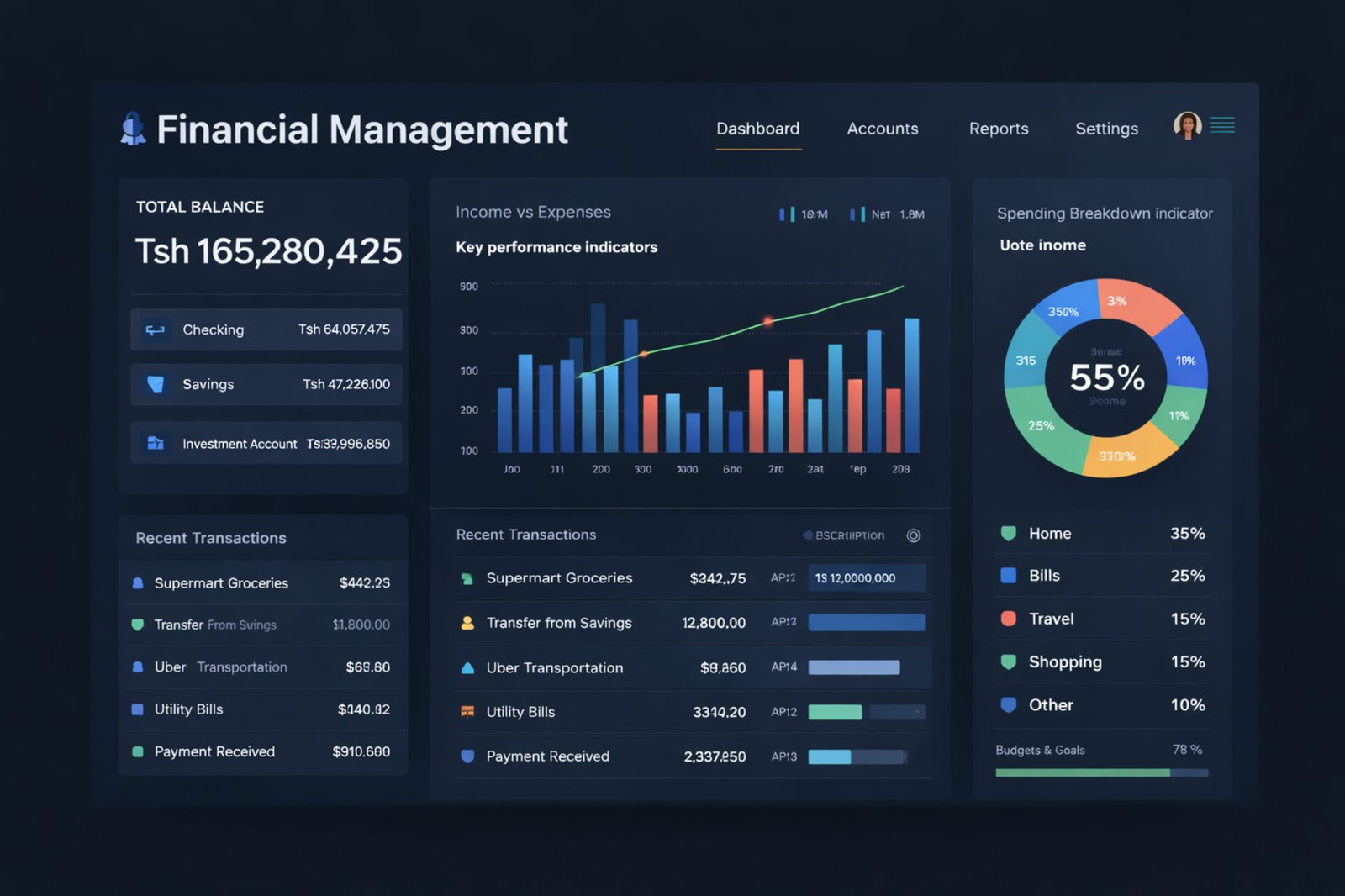
A management system can generate reports showing:
- Total donations and tithes received this month or year
- Monthly income compared to previous periods
- Detailed breakdown of project expenditures
- Outstanding balances and pending commitments
These reports take seconds to generate instead of hours of manual calculation.
Member Contribution Tracking
For larger churches, tracking individual member contributions is an important pastoral and administrative task. A management system can maintain organized records for every member, making it easy to:
- See which members contribute regularly
- Generate annual contribution statements
- Identify members who may need pastoral follow-up
- Recognize and appreciate consistent givers
Conclusion
A church financial management system improves transparency, organization, and accountability in church finances. When members see that funds are managed responsibly and professionally, trust in leadership grows and generosity increases.
KemotechTz develops management systems for churches and religious organizations across Tanzania — helping them manage finances responsibly while focusing on their mission.